
What Risks Do They Pose to Websites?
PHP, one of the most widely used programming languages for web development, faced several critical security vulnerabilities in October 2026, attracting significant attention from the international cybersecurity community. The identified issues raised concerns about the security of web servers and PHP-based applications, particularly due to the possibility of remote code execution (RCE) without authentication.
On October 21, 2026, the official PHP development team released security updates addressing two major vulnerabilities identified as CVE-2026-109618 and CVE-2026-109619. Both received a CVSS 4.0 severity score of 9.2 out of 10, classifying them as critical vulnerabilities. Two days later, on October 23, a third security issue was disclosed under CVE-2026-115560, associated with session management and file upload functionality.
These vulnerabilities are particularly important for server administrators, web developers, and companies using PHP to manage websites, online stores, and web applications. This article examines the nature of the reported security issues, their potential impact on web infrastructure, and the measures required to reduce associated risks.
1. PHP2Shell – Two Critical Vulnerabilities Enabling Remote Code Execution
The two primary vulnerabilities became informally known within the security community as "PHP2Shell." They affect the internal PHP engine rather than being limited to specific frameworks or applications developed using the language.
The first vulnerability, CVE-2026-109618, is associated with improper memory management during Out of Memory (OOM) situations. PHP uses a configurable memory limit, defined through the memory_limit directive, to control the resources consumed by individual requests.
The issue occurs when a request causes the memory limit to be exceeded while the PHP process is in a state where certain internal structures have not been fully initialized. During resource cleanup procedures, the PHP engine may incorrectly interpret these structures and perform invalid memory operations.
Under certain conditions, this issue can lead to memory corruption and potentially allow arbitrary code execution on the server.
The second vulnerability, CVE-2026-109619, is associated with improper management of the internal state of PHP processes. More specifically, certain request-related information may remain referenced after the memory in which it was stored has already been released.
This behavior is known in software security as a "Use After Free" vulnerability. When a PHP process reuses information that is no longer valid, memory corruption may occur, potentially creating an opportunity for code execution.
Both vulnerabilities are considered extremely serious because they may allow attacks without requiring the attacker to authenticate to the application.
2. The Third PHP Vulnerability: CVE-2026-115560 and Session Management Issues
On October 23, 2026, the PHP development team published an additional security advisory concerning a third vulnerability, identified as CVE-2026-115560.
This vulnerability is associated with the Session Upload Progress functionality, which PHP uses to track the progress of file uploads to a server.
The vulnerability may allow remote code execution, although exploitation requires a specific combination of unusual configuration settings and application behavior.
More specifically, the issue occurs when an application uses certain session serialization settings, subsequently changes the serialization handler during execution, and keeps the upload progress tracking functionality enabled.
Serialization is the process of converting data into a format that can be stored and reconstructed later. In PHP, session management relies on specific mechanisms to store and retrieve this information.
Improper configuration can create situations in which user-controlled data is interpreted within an unsafe context.
Unlike the first two vulnerabilities, PHP did not release an emergency patch for CVE-2026-115560, considering the exploitation scenario relatively uncommon. The official recommendation was to temporarily disable the Session Upload Progress functionality until a corrective update becomes available.
3. Which Websites and Servers Are Affected?
An important aspect of this incident is that the vulnerabilities are not limited to a particular development platform or website type.
According to information published by the PHP development team and European cybersecurity organizations, affected installations include PHP environments processing web requests, regardless of whether they use PHP-FPM, Apache with mod_php, php-cgi, FrankenPHP, or LiteSpeed.
This means that numerous types of projects may be affected, including:
- Corporate and business websites.
- Online stores and eCommerce platforms.
- Custom-built web applications.
- CMS platforms and PHP-based extensions.
- Websites developed using frameworks such as Laravel, Symfony, or CodeIgniter.
- Administrative systems and internal applications accessible through the internet.
It is important to note that these vulnerabilities exist at the PHP engine level. Consequently, a website may be exposed even if its application code does not directly contain the underlying vulnerability.
Similarly, using a well-known CMS or a modern framework does not eliminate the risk. If the server infrastructure runs a vulnerable PHP version, the application may remain exposed.
4. What Are the Consequences of a Successful Exploit?
The primary risk associated with the PHP2Shell vulnerabilities is Remote Code Execution (RCE), which refers to the ability to execute arbitrary instructions on an affected server.
Depending on the infrastructure configuration and the permissions assigned to the PHP process, an attacker could potentially gain access to various system resources.
Potential consequences include:
Application File Compromise: Unauthorized access may allow attackers to modify website files, introduce malicious scripts, or alter application functionality.
Access to Sensitive Information: Databases, configuration files, and certain authentication credentials may become vulnerable if they are accessible to the compromised PHP process.
Installation of Malicious Components: Attackers may attempt to introduce persistent unauthorized access mechanisms or scripts that allow continued control over the server.
Website Availability Issues: Server resources may be excessively consumed, potentially making applications unavailable to legitimate users.
Compromise of Other Services: In improperly configured infrastructures, access obtained through one service may facilitate attacks against other components hosted on the same server.
The actual severity of the impact depends on the permissions of the PHP execution user, process isolation mechanisms, and the overall infrastructure configuration.
5. Which PHP Versions Are Affected and What Updates Should Be Installed?
To address the two primary vulnerabilities, the official PHP development team released security updates on October 21, 2026.
The corrected versions are:
- PHP 8.5.12
- PHP 8.4.27
- PHP 8.3.36
- PHP 8.2.35
All earlier versions within the corresponding release branches are affected by CVE-2026-109618 and CVE-2026-109619.
PHP 8.1 and older versions require additional attention because they no longer receive official security updates from the PHP project. Some Linux distribution vendors and long-term support providers may supply additional security patches, but administrators should verify their availability.
Regarding CVE-2026-115560, the temporary recommendation communicated by the PHP team is to disable the following directive:
session.upload_progress.enabled=0
This setting should be applied at the server configuration level so that it takes effect before requests are processed. PHP processes should also be restarted to apply the updated configuration.
It is important to emphasize that disabling this functionality is a temporary mitigation for the specific vulnerability and does not replace the PHP updates required to address the first two security issues.
6. Security Recommendations for Web Developers and Server Administrators
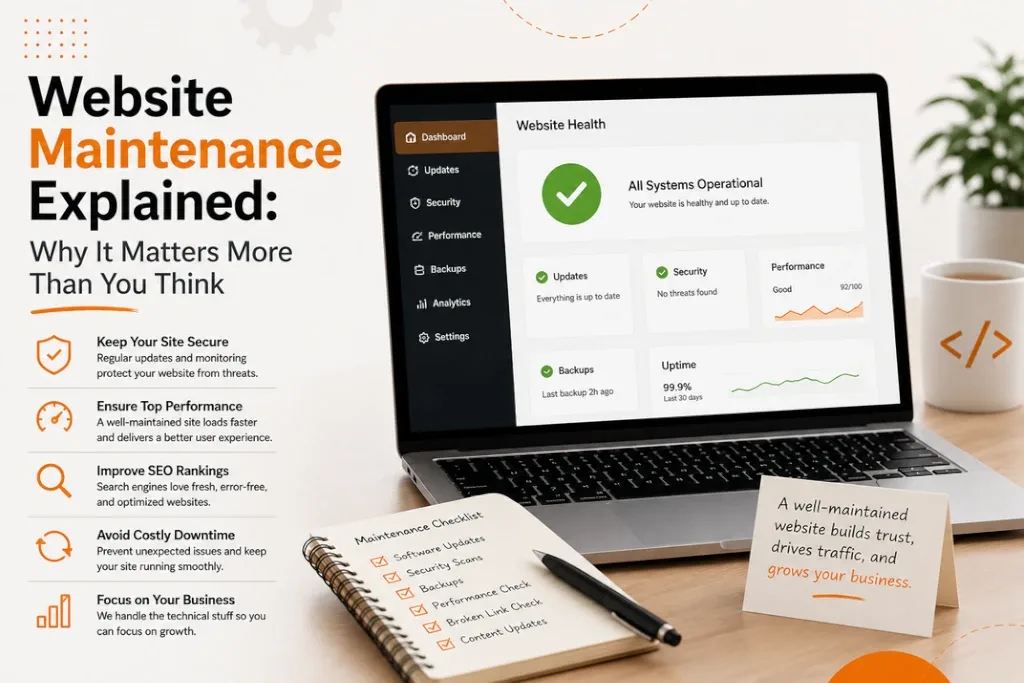
The October incident demonstrates how important continuous infrastructure maintenance is for hosting web applications.
The first step is to verify the PHP version used by every website and application. Administrators should identify all existing PHP instances, including those indirectly used by applications, containers, or external services.
The next step is to upgrade to a version that includes the official security fixes. For servers managed through control panels such as cPanel or Plesk, administrators should verify that all PHP versions available to hosting accounts have received the required updates.
Other important security measures include:
- Reviewing the permissions assigned to PHP processes.
- Restricting access to configuration files and sensitive information.
- Using updated versions of frameworks, CMS platforms, and extensions.
- Monitoring access logs and server processes for suspicious activity.
- Using a Web Application Firewall (WAF) as an additional security layer.
- Performing regular backups and verifying recovery procedures.
- Conducting periodic security audits of existing web applications.
Organizations that cannot immediately apply the updates should consider temporarily isolating internet-facing systems, following recommendations from cybersecurity authorities.
Conclusion
The PHP vulnerabilities discovered in October 2026 represent a serious warning for the entire web development industry. The possibility of unauthenticated remote code execution demonstrates that security issues can emerge even at the level of fundamental technologies used to build websites.
Although the PHP development team responded by releasing security updates for the two critical vulnerabilities, the emergence of a third issue highlights the fact that securing a programming language is an ongoing process.
For developers, server administrators, and website owners, the message is clear: regular software updates, vulnerability monitoring, and the implementation of security best practices are not optional activities.
A high-performance website is not defined solely by modern design, fast loading times, and a good user experience. Infrastructure security and data protection must be fundamental priorities in every professional web development project.





No Reviews yet
Be the first to review this post.