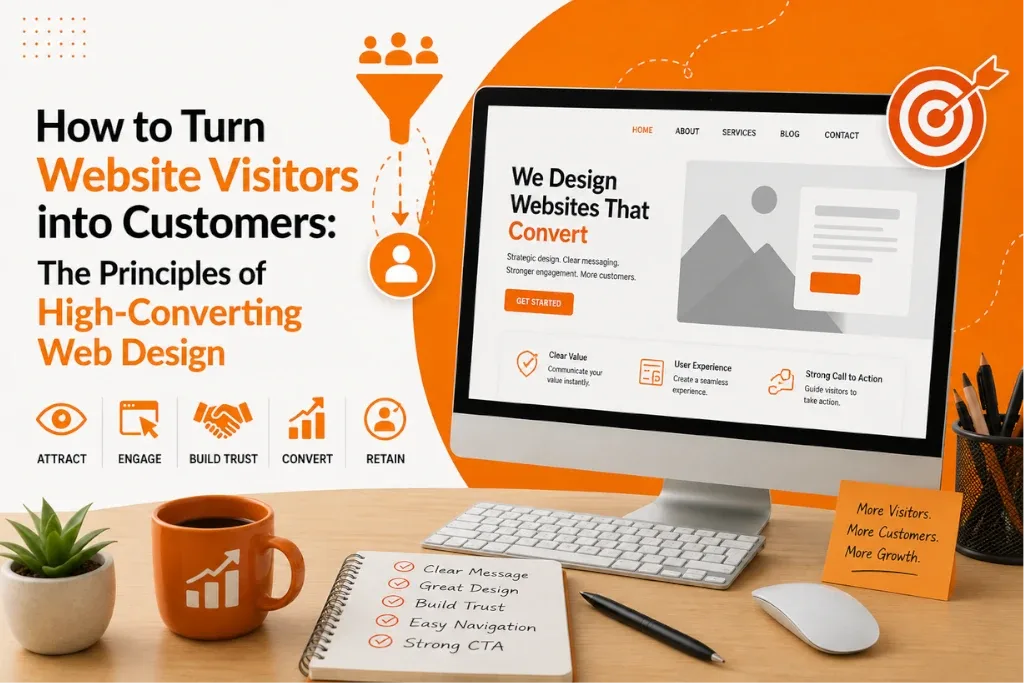
Design principles that turn browsing into buying
Getting visitors to your website is only half the job. The real value comes from turning those visitors into leads and customers — and that outcome depends far more on design decisions than most businesses realize.
Clarity Beats Cleverness
A high-converting page tells visitors exactly what you do, who it's for, and what to do next — all within the first few seconds. Clever taglines and abstract imagery might look impressive, but if a visitor has to think to understand your offer, most simply leave instead.
One Primary Goal Per Page
Every page should have a single, clear purpose. A homepage trying to sell five services, promote a blog, collect newsletter signups, and showcase a portfolio all at once ends up doing none of them well. High-converting design picks one primary action per page and removes anything that competes with it.
Visual Hierarchy Guides the Eye
Size, contrast, spacing, and color aren't decoration — they're direction. The most important message should be the most visually dominant element on the page, and every supporting element should lead the eye naturally toward the call to action.
Trust Signals Remove Hesitation
Testimonials, client logos, certifications, and real results reduce the natural hesitation a visitor feels before taking action. They work best placed close to the decision point — right next to the form or button, not buried on a separate page.
Friction Is the Enemy of Conversion
Every extra field, extra click, or unclear next step reduces the number of people who complete it. A high-converting design ruthlessly removes friction: short forms, obvious buttons, and a checkout or contact process that takes seconds, not minutes.
Speed and Mobile Experience Are Non-Negotiable
None of the principles above matter if the page loads slowly or breaks on a phone. Since most traffic is mobile today, a converting design has to perform just as well on a small screen as it does on a desktop monitor.
High-converting design isn't about following trends — it's about applying these principles consistently across every page. If your website gets visitors but not results, our team can help review your current design against these principles and rebuild what's holding conversions back.




No Reviews yet
Be the first to review this post.